
From the Fabulous Florals Blog
Cascading Phalaenopsis Bouquet: Step-by-Step Video and Pro Tips
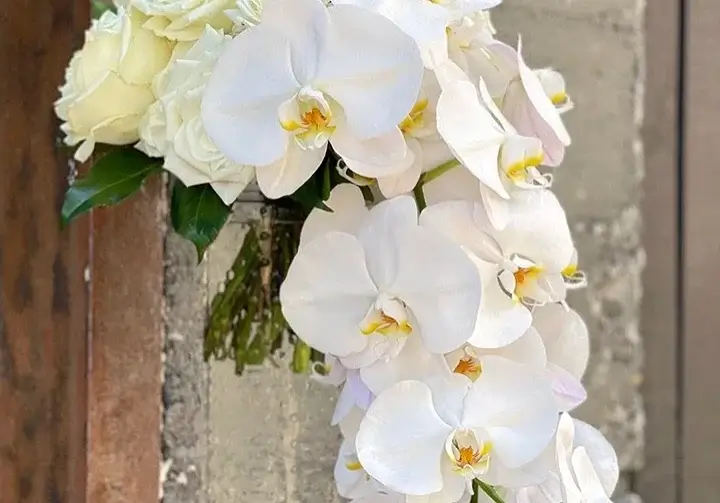
Phalaenopsis orchids bring drama and elegance to a wedding bouquet. In this Flower School video from Floral Design Institute, Leanne Kessler shows how to build a hand-tied cascading bouquet using moth orchids (Phalaenopsis), hydrangea, and roses. Below you’ll find the video, the exact steps, and practical tips on wiring, mechanics, and storage.
Watch the video
Looking for DIY foundations first? Read our pillar guides: The Definitive Guide to DIY Wedding Flowers and How to Choose Flowers for DIY Arrangements.
What you’ll learn
- How to weave and wire Phalaenopsis stems to form a stable cascade
- Where to place hydrangea and roses so the orchids shine
- How to cover mechanics and shape the back with foliage
- The safe way to conceal translucent petal spots on orchids
- Storage and transport tips that protect delicate blooms
Shop the flowers from the video
- 3 Phalaenopsis orchid stems
- 2 hydrangea heads
- 5 Polo roses (ivory)
- 7 Eskimo roses (white)
- 5 Israeli ruscus stems
- 3 fatsia leaves
- 7 galax leaves
- Bind wire and ribbon for finishing
Step-by-step overview
1) Create the orchid cascade
Weave three Phalaenopsis stems together so the blooms face forward. Use bind wire at the top and bottom. This gives you a strong, graceful line for the cascade.
2) Build structure with hydrangea and roses
Cluster hydrangea for instant volume. Add Eskimo and Polo roses, weaving each bloom into natural openings. Place a few roses low near the cascade and a few up top for balance.
3) Cover mechanics and frame the shape
Use a mix of Israeli ruscus, fatsia, and galax to cover the back and collar the handle. Larger leaves show more; smaller leaves give a subtle rim of color.
4) Secure and finish
Wrap the handle above your hand with bind wire two or three times. Keep stems long for hydration. Before delivery, trim shorter and finish with ribbon to cover the mechanics.
Care and handling for Phalaenopsis orchids
- Longevity: In water, Phalaenopsis can last two weeks or more.
- Temperature: Avoid cold. If using a cooler, aim near 50°F.
- Hydration chamber: Place bouquet in water, then bag the design to hold humidity before storing in that slightly warmer cooler.
- Blemish fix: If translucent spots show, lightly spray the back of petals with Design Master Flat White. Do not spray the front of the blooms.
Transcript
Welcome to the FlowerSchool.com video library. I’m Leanne Kessler, director of the Floral Design Institute. Today I’m sharing one of my favorite blooms, Phalaenopsis orchids, in a cascading wedding bouquet.
Materials. The starting point is Phalaenopsis orchids. A quick tip when working with them: sometimes the petals have lighter translucent spots that show from the front. To conceal these, lightly spray the back side of the blooms with Design Master Flat White. Do not spray the face. The color will soften those spots and the orchids stay beautiful and long lasting. For supporting flowers I’m using hydrangea and roses, plus a bit of foliage.
Stems. Each Phalaenopsis stem carries blooms that face in different directions. Adjust them so most of the faces look forward and you do not end up with a visible gap. I bundled three stems and wove them together off camera. It helps to have two people for this step, one to hold and one to weave. This creates a stable, solid cascade of orchids. I then wired the stems together with bind wire in two places, top and bottom, and the bouquet was ready for designing.
Preparation. I removed foliage and thorns from the roses in advance. That way I can cluster the hydrangea in my hand, add a second head for substance and density, then bring in two varieties of roses. I’m using Eskimo (a true white) and Polo (a softer ivory). I weave the blooms into the hydrangea, tucking them in to find the perfect openings. I place roses on both sides, even tucking a few down near the orchid cascade, then add more near the top.
Foliage. After the flowers are placed, I enhance the design with a variety of greens and use them to cover mechanics on the back. Israeli ruscus tucks in easily. Fatsia leaves add substance. Small galax leaves can create a collar. Choose larger leaves if you want them to show, or smaller leaves if you just want a hint of color. I like mixing greens because the color contrast and different shapes add depth. A few stems toward the front and a few on the opposite side make a big difference.
When everything is placed, I check the bouquet in a mirror to confirm balance and facing. I secure the handle with bind wire above my hand, wrapping two or three times.
Recipe. For this bouquet I used: 3 stems of Phalaenopsis orchids, 2 hydrangea, 5 Polo roses, 7 Eskimo roses, 5 Israeli ruscus stems, 3 fatsia leaves, and 7 galax leaves. I tie off with bind wire, then shorten the stems to a little more than two hand lengths. Before delivery I will trim shorter again. I leave the stems long so the bouquet can rest in a vase of water, then I clip it down and finish with ribbon to cover the bind wire.
How long will they last? Phalaenopsis are very long lasting and can hold in a vase of water two weeks or more. They do not like cold. If you must use a cooler, a warmer cooler around 50°F is best. Place the bouquet in a vase of water, slip the entire design into a plastic bag to create a hydration chamber, then put it in that warmer cooler. It will hold well. The next morning you can remove it, trim the stems, add the ribbon, and head to the wedding.
You’ll find more design inspiration and care information at FlowerSchool.com. If you have questions you can contact the Floral Design Institute directly. Now it’s your turn. Gather beautiful flowers and create a cascading bouquet with Phalaenopsis. They are a joy to work with. Have fun and do something you love.
FAQs
Weave three Phalaenopsis stems together and bind with wire at the top and bottom. Face blooms forward to avoid gaps.
Yes. Lightly spray the back of the petals with Design Master Flat White. Do not spray the front of the blooms.
In a vase of water, often two weeks or more. Avoid cold; store around 50°F in a bagged hydration chamber if needed.
Israeli ruscus, fatsia, and galax are great choices. Use larger leaves for a visible collar or smaller leaves for subtle edging.